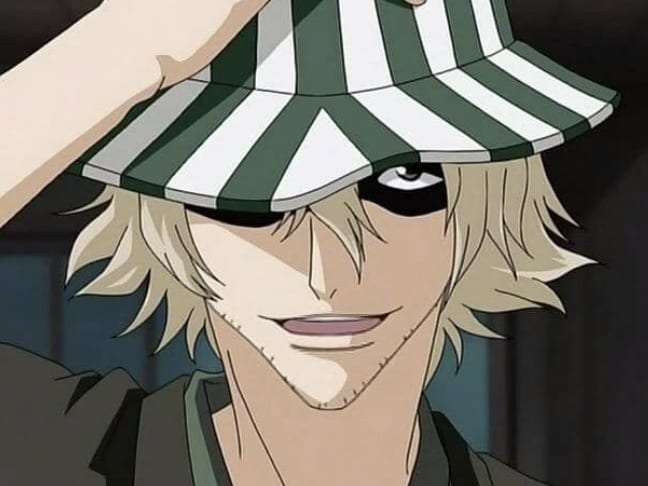
The most searched term on Pornhub for five consecutive years didn't come out of nowhere. It came out of a tradition that's over a thousand years old, shaped by samurai, woodblock printers, censors, and finally, anime.
This is the full history.
What "Hentai" Actually Means
Start with the word itself, because most people using it don't know what it means in Japanese.
Hentai (変態) is two kanji:
- 変 (hen): change, unusual, strange
- 態 (tai): appearance, condition, state
Literally: "metamorphosis" or "transformation." Metaphorically: abnormal, deviant, perverse.
The word entered common usage in Japan during the Meiji era (1868-1912) as a psychological term. When German sexologist Richard von Krafft-Ebing's Psychopathia Sexualis was translated into Japanese, it became Hentai Seiyoku Shinrigaku, "The Psychology of Perverse Sexual Desires." The term "hentai seiyoku" (変態性欲, perverse or abnormal sexual desire) was formally coined in 1915 by Japanese researchers Eiji Habuto and Jun'ichiro Sawada.
For most of the 20th century, calling something "hentai" in Japan meant calling it "perverted" or "weird" in a general sense, like calling someone a deviant.
The term they actually use in Japan for what we call hentai: jū hachi kin (18-restricted), or simply ecchi, which comes from pronouncing the letter "H" in Japanese romanization. When Japanese people call something "H" (etchi), they mean it's lewd or sexual. The word "hentai" used the way Westerners use it, to mean animated pornography specifically, developed entirely in English.
Act I: Shunga (794 AD to 1868)
Japan's erotic art tradition predates the word hentai by more than a thousand years.
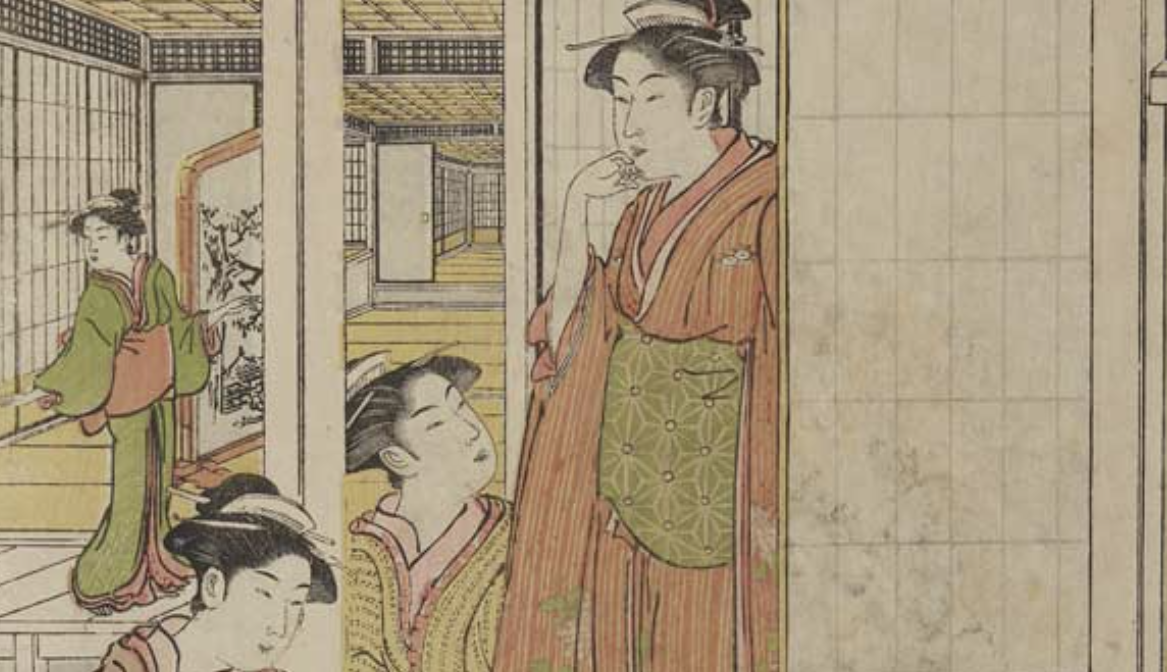
Shunga (春画), literally "spring pictures," with spring being a classical Japanese euphemism for sex, is a genre of erotic woodblock prints that peaked during the Edo period (1603-1867) but traces back to the Heian court (794-1185).
As early as the 700s, nobles were commissioning erotic handscrolls. Monks had them. Samurai had them. The shogunate tried repeatedly to suppress them and repeatedly failed.
The Edo Period: Everyone Made Shunga
By the 17th and 18th centuries, shunga was mainstream in a way that's difficult for modern Westerners to grasp. Every significant Japanese artist of the period created explicit erotic work. Not as a guilty side project, as a normal and financially important part of their portfolio.
Hokusai, the artist behind The Great Wave, one of the most reproduced images in human history, created extensive shunga. His most famous erotic work, The Dream of the Fisherman's Wife (1814), depicts a female diver sexually entwined with two octopuses. It's currently on display in Tokyo's Kabukicho entertainment district. A single shunga commission could provide six months of income for an artist. It was profitable, respected work.
Shunga served multiple social functions in Edo Japan:
- Wedding gifts: brides were traditionally given explicit shunga scrolls as introductions to sex
- Good luck talismans: samurai tucked copies into their armor before battle, believing explicit images prevented death
- Sex education: practical guides for the inexperienced
- Entertainment: for all social classes, all genders, all ages
The shogunate issued censorship edicts starting in 1661, banning erotic books (kōshokubon). Producers largely ignored these edicts. The gap between official prohibition and actual practice established a pattern that would repeat throughout Japanese history.
The Meiji Collapse
When Western photography and printing technology arrived during the Meiji era (1868-1912), shunga couldn't compete. Why hand-draw explicit woodblock prints when you can photograph real people? Production collapsed. The tradition went underground.
But the visual vocabulary, exaggerated proportions, fantastical scenarios, stylized characters, didn't disappear. It went dormant for about 60 years.
Act II: The Word Gets Weird (1900s-1940s)
While shunga was declining, "hentai" as a concept was evolving through Japanese psychology and sexology.
The Meiji and Taisho eras (1868-1926) saw Japan aggressively importing Western intellectual frameworks. Sexual psychology was one of them. Krafft-Ebing, Freud, and Hirschfeld were translated and discussed. "Hentai seiyoku" (perverse sexuality) became a category doctors and academics used to classify anything outside heterosexual norms, homosexuality, fetishes, unusual desires.
This clinical framing of sexual deviation would later feed back into how hentai content was categorized and discussed, as something inherently "abnormal" and therefore requiring its own separate labeling system.
Act III: The Manga Explosion (1947-1983)
Modern manga, the format that would eventually produce modern hentai, begins with one person.
Osamu Tezuka published New Treasure Island in 1947. His style, large eyes, expressive faces, cinematic panel layouts borrowed from American animation, defined what "manga" looked like. Every manga artist who followed worked within the visual language Tezuka created.
Including, eventually, erotic manga artists.
The First Hentai Manga Magazines
1973: Manga Bestseller (later renamed Manga Erotopia) launched as the first dedicated hentai manga magazine in Japan. It established ero-gekiga, realistic, adult-oriented erotic comics, as a commercial genre.
By 1978, at the genre's peak, 80 to 100 different ero-gekiga magazines were being published annually in Japan. The art style was still largely realistic, influenced by gekiga's grittier visual approach rather than Tezuka's cute aesthetic.
The Pivot That Changed Everything
1979: Hideo Azuma published Cybele, a pornographic manga that would later earn him the title "Father of Lolicon." It wasn't just another explicit manga, it was explicitly sexualized content drawn in Tezuka's cute style.
This was the moment that defined modern hentai's visual identity. Instead of realistic adult bodies, Cybele used the round faces, oversized eyes, and stylized proportions of mainstream manga. The collision of explicit content with cute aesthetics produced something that looked like nothing else in global adult entertainment.
The 1980s saw a rapid shift. Realistic ero-gekiga gave way to the bishōjo style (beautiful girl), the huge-eyed, anime-proportioned female characters that now define the genre globally. Fan communities organized around specific character types. The otaku subculture that was forming in parallel was a massive driver of demand for this content.
Act IV: The Anime Era Begins (1932-1993)
Animated hentai has a stranger origin story than most people realize.
1932: The earliest known attempt at a pornographic anime was Suzumi-bune by Hakusan Kimura. It was seized by police while still half-complete and never publicly shown. The existence of a pre-war attempt at hentai animation is rarely discussed.
1969-1970: Osamu Tezuka himself produced animated films with explicit sexual content, A Thousand and One Nights (1969) and Cleopatra: Queen of Sex (1970). The latter became the first animated film to receive an X rating in the United States.
February 1984: Lolita Anime by Wonder Kids Studio became the first hentai OVA to receive a general commercial release in Japan. Its content, which included depictions of minors, would be completely illegal in most countries today. It opened the door for the format.
August 1984: Cream Lemon launched. This franchise would run for over two decades and is credited as the most influential hentai series in the 1980s. Researcher Patrick W. Galbraith wrote that it "laid the foundation for pornographic animation in Japan."
Why Tentacle Sex Exists
1986: Artist Toshio Maeda invented tentacle sex. Not because it was a fetish he had. Because of Japan's censorship laws.
Article 175 of the Japanese Penal Code required that genitalia be obscured in pornographic materials. Male human genitalia had to be pixelated or blurred. But the law said nothing about non-human appendages. A demon's tentacle didn't need to be censored.
Maeda's solution was, depending on your perspective, either creative legal engineering or one of the stranger consequences of censorship law in history. Either way, tentacle pornography is now a globally recognized category, and it exists specifically because Japanese law in 1986 didn't anticipate the question.
Act V: The West Discovers Hentai (1990-2000)
For most of the 1980s, hentai was entirely contained within Japan. The anime reaching Western markets, Akira, Robotech, early Sailor Moon, was mainstream, with sexual content removed for export.
1990: IANVS Publications printed the first American anime erotic publication, Anime Shower Special.
1992: Central Park Media launched Anime 18, a dedicated hentai distribution label. Their first major release was Urotsukidōji: Legend of the Overfiend, featuring Toshio Maeda's tentacle sequences. It became the first animated film to receive an NC-17 rating in America and introduced most Western audiences to hentai as a concept. Midnight theatrical screenings. VHS mail order. A cult audience that didn't know what to call what they were watching.
1994: Antarctic Press published the English translation of Bondage Fairies, which sold well in the American market despite minimal success in Japan.
1995: A.D. Vision's SoftCel Pictures label released 19 hentai titles in a single year.
By 2000: "Hentai" had entered English as a standalone noun meaning "Japanese animated pornography." Pornhub and similar platforms didn't yet exist, but existing search data showed "hentai" already ranking as the 41st most popular search term on the entire internet.
The word that originally meant "psychological abnormality" had completed its transformation into a genre category with a global fanbase.
Why Is Hentai Specifically Japanese?
This question has a real answer.
1. The Shunga Foundation
No other culture developed an equivalent 400-year tradition of high-quality, mainstream erotic visual art. European erotic art existed but was largely restricted to elite patrons. Japanese shunga was sold openly in shops to anyone who could afford it. The visual language of stylized erotic imagery was built into Japanese culture at a level that made its extension into manga and anime a natural evolution rather than a radical break.
2. The Censorship Paradox
Article 175's requirement to pixelate genitalia forced Japanese artists to work around the law creatively. Tentacle sex. Fantasy creatures. Exaggerated proportions that allowed genital areas to be implied rather than shown. The restrictions produced innovation rather than suppression, because the demand for the content was too large to eliminate.
Western censorship approached explicit content differently, attempting to restrict distribution entirely rather than requiring aesthetic workarounds. This produced a different outcome: censorship in the West delayed erotic art's development; censorship in Japan distorted its aesthetics in ways that made it visually distinctive.
3. Otaku Culture
The otaku fan communities that formed in the 1980s around anime and manga created infrastructure, conventions, fanzines (doujinshi), fan art networks, that supported erotic fan content at scale. Comiket, founded in 1975, began as a venue for fan-created content and grew into the world's largest fan convention. A significant proportion of its content has always been adult doujinshi.
By the time internet distribution became possible, Japan had decades of organizational infrastructure for creating, distributing, and consuming erotic fan content. No other country had anything comparable.
4. Anime's Global Export Made It the Default
When the rest of the world wanted drawn animated adult content in the 1990s, Japan was the only country producing it at scale. The aesthetic became the category. "Hentai" meant specifically Japanese-style drawn pornography partly because there was no other style widely available.
How the Rest of Asia Compares
South Korea: Manhwa and Webtoons
Korea's equivalent of manga is manhwa. Adult manhwa has a significant market, particularly through digital webtoon platforms where Korean censorship laws for online content are more relaxed than print regulations.
Korean adult content has a distinct visual style from Japanese hentai, less fetishistic category-based organization, more emphasis on romance and drama alongside explicit scenes. The genre is large but lacks the cultural depth and organizational infrastructure Japan developed over decades.
China: Strictly Suppressed
China has manhua (Chinese comics) and donghua (Chinese animation). The Chinese government's censorship apparatus actively suppresses explicit adult content. Adult manhua exists but primarily underground, distributed through encrypted channels and private groups.
The irony: China is one of the largest consumers of Japanese hentai via VPN. A 2024 analysis of traffic to major hentai platforms shows significant Chinese viewership despite the official censorship.
Taiwan: More Liberal, Growing
Taiwan has a more liberal content environment than mainland China and has developed domestic adult manhua production. Taiwanese artists create content in the Japanese aesthetic, and Taiwan is one of the regional markets for Japanese adult manga imports.
Everywhere Else in Asia: Japanese Dominance
In Thailand, Vietnam, Indonesia, the Philippines, anime visual style dominates adult fan content. Local creators produce content in Japanese aesthetic conventions rather than developing distinct national styles. The Japanese template spread so early and comprehensively that alternatives never got traction.
Hentai Outside Asia: Did Anyone Else Develop This?
Sort of.
Western adult animation exists, Fritz the Cat (1972), the Ralph Bakshi films, various underground comics in the 1970s-80s. But it never developed the same category organization, character-type system, or fan creation infrastructure.
France ("manfra") has a tradition of manga-influenced BD (bande dessinée) comics, including adult content. French artists like Bastien Vivès have created manga-style erotic works. The aesthetic is influenced by Japan but identifiably European.
Rule 34 content, the internet principle that sexual fan art exists of every character, produced enormous amounts of Western-created drawn adult content. But it's almost entirely derivative of Japanese aesthetics. The artists creating Rule 34 content are working within a visual grammar that Japan developed.
No country has developed an independent drawn adult animation tradition at scale outside Japan. The closest attempts, American adult animation (South Park, Family Guy), deliberately de-sexualize their content. The Western animation industry's association with children's entertainment made adult content commercially and culturally untenable in mainstream contexts.
The Timeline at a Glance
| Year | Milestone |
|---|---|
| ~700 | First erotic handscrolls in Heian Japan |
| 1603-1867 | Edo period: shunga peaks, every major artist creates it |
| 1814 | Hokusai's Dream of the Fisherman's Wife (octopus print) |
| 1868 | Meiji era: Western photography kills shunga market |
| 1907 | Article 175 enacted: obscenity law requiring censorship |
| 1915 | "Hentai seiyoku" coined as psychological term |
| 1932 | First hentai anime attempted (Suzumi-bune): seized by police |
| 1947 | Osamu Tezuka defines modern manga visual style |
| 1973 | First hentai manga magazine (Manga Bestseller) |
| 1975 | Comiket founded: adult doujinshi market begins |
| 1978 | Peak of ero-gekiga: 80-100 magazines published annually |
| 1979 | Hideo Azuma's Cybele: cute style + explicit content fused |
| 1984 | First hentai OVA (Lolita Anime), then Cream Lemon |
| 1986 | Toshio Maeda invents tentacle sex to bypass censorship law |
| 1992 | Urotsukidōji released in USA: Western market opens |
| 2000 | "Hentai" = 41st most searched term on entire internet |
| 2021 | "Hentai" hits #1 on Pornhub: first of five consecutive years |
| 2025 | Fifth consecutive year as Pornhub's most searched term globally |
Where to Read Hentai Today
The tradition that started with Edo woodblock prints now lives on hundreds of platforms. The biggest free archives are nhentai (500K+ doujinshi, no login required) and E-Hentai (1.59M galleries, the most comprehensive archive online). For individual fan art organized by character and series, Rule34.xxx has 14.5 million posts covering essentially every character in existence.
If you want officially licensed doujinshi with English translations, Irodori Comics and FAKKU are the two main paid options. Both work directly with Japanese publishers and artists.
Want to understand the legal landscape before you start? Read our country-by-country guide to hentai law. And if you're curious which specific genres dominate in each country and why, the regional breakdown covers Japan, Brazil, the Philippines, and more with actual data. For the economics behind the artists, what manga and doujinshi illustrators actually earn is the full picture.