
560,000 people attended Comiket in Tokyo in 2024. Every one of them was there to buy content made by artists who drew it, in most cases, for love, not money.
The question "how much does a manga artist earn?" has no single answer. It spans from manga assistants earning ¥1 million per year (less than $7,000) all the way to Eiichiro Oda, who has reportedly earned more than $200 million over his career. The gap between those two points is one of the widest in any creative industry.
This piece covers the full picture: official serialization rates, the doujinshi economy, digital subscriptions like Pixiv Fanbox and Patreon, freelance commissions, and the honest answer to whether you can build a sustainable life as a manga or hentai illustrator.
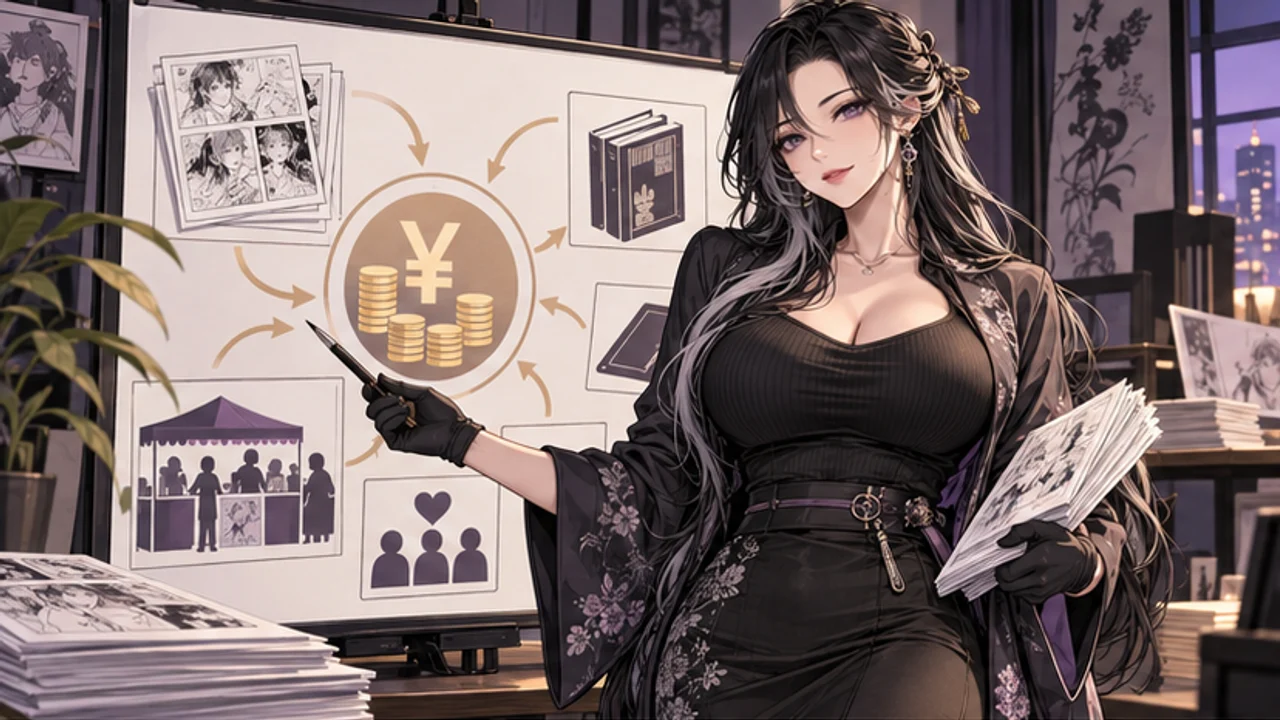
Where the Obsession Comes From
Before the money, the reason people do this at all.
Research published in Journal of Vocational Behavior on the careers of manga artists (ScienceDirect, 2025) describes what it calls a "calling," one that forms in the formative years of childhood, is reinforced through social validation, and becomes difficult to abandon even when the economics don't work. Most professional mangaka didn't choose drawing as a career. They were already doing it compulsively before the decision was ever framed.
The typical path:
- Early practice: Building a visual voice through regular drawing and study.
- First peer audience: Sharing non-explicit work, receiving feedback, and learning a production rhythm.
- University or age 18-22: First submissions to publishers or first adult doujinshi at a local event.
For adult and doujinshi artists, a path may run through a publisher, an event circuit, or an independently built audience. The route varies substantially by language, rights, distribution model, and the creator's own boundaries.
The art itself is the answer to where the drive comes from. The money question comes later. Sometimes much later.
The Four Income Paths
There's no single income model for manga or illustration. Most working artists combine several:
| Path | Stability | Ceiling | Barrier to entry |
|---|---|---|---|
| Serialized manga (publisher) | High if you keep it | Very high | Extremely competitive |
| Self-published doujinshi | Low–medium | Medium | Low, event-dependent |
| Digital subscriptions (Fanbox/Patreon) | Medium | High | Requires existing audience |
| Freelance commissions | Low | Medium | Moderate |
Let's go through each in detail.
Path 1: Official Serialization and the Manga Publishing System
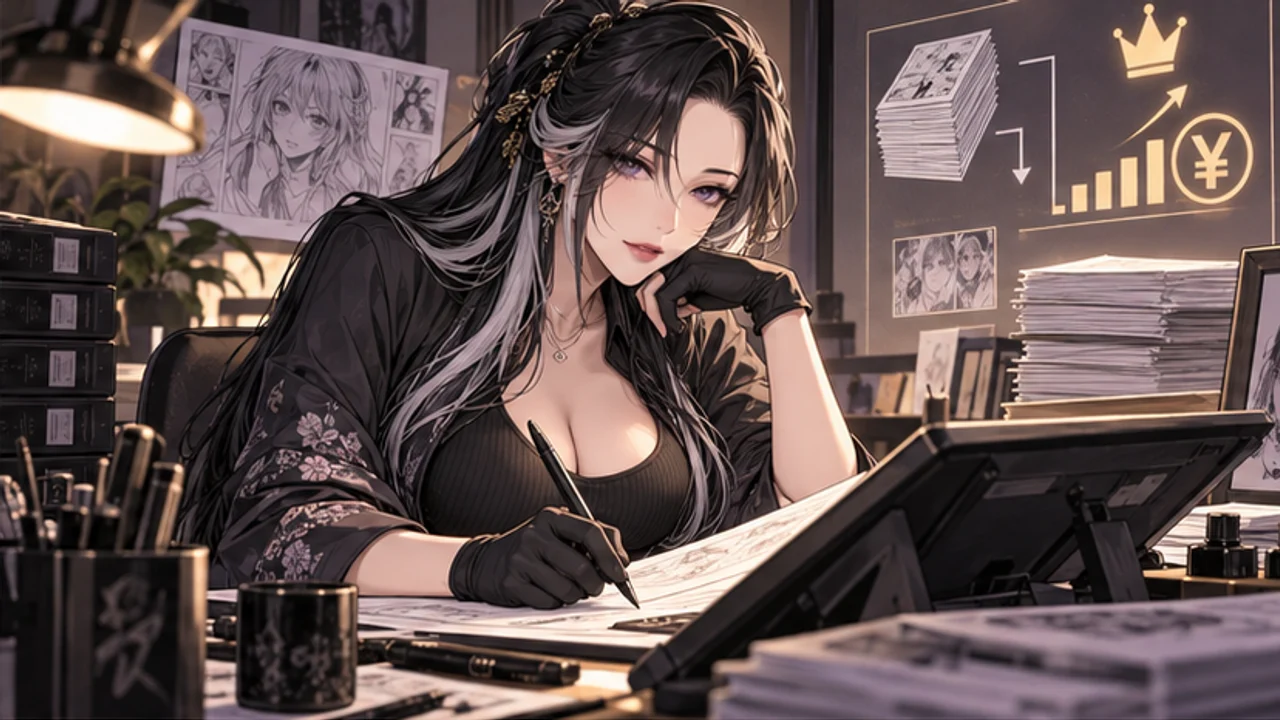
Getting serialized in a major magazine (Weekly Shonen Jump, Young Animal, Shonen Sunday, or their adult equivalents) is the "stable job" version of being a manga artist. It's rare, demanding, and the pay structure is more nuanced than most people assume.
Page Rates
According to Kadokawa editor Hiroyuki Watanabe speaking at NYCC 2024, the current rate structure is:
| Experience Level | Rate per Page | Monthly Output (Weekly Series) | Monthly Income from Fees |
|---|---|---|---|
| Newcomer | ¥8,000–¥10,000 ($57–$72) | 80 pages | ¥640K–¥800K ($4,600–$5,750) |
| Average | ¥12,000 ($88) | 80 pages | ¥960K ($6,900) |
| Experienced | ¥15,000–¥30,000 ($110–$217) | 80 pages | ¥1.2M–¥2.4M ($8,600–$17,200) |
Those figures look reasonable until you factor in costs. A weekly series requires assistants. A professional setup might involve two to four assistants, each earning approximately ¥200,000 per month. After assistants' wages, studio rent, materials, and software, the actual net income narrows considerably.
A monthly series (32 pages/month) is more manageable but generates proportionally less from page fees.
Royalties
Page fees are the salary. Royalties are the upside.
Mangaka earn 10% royalty on physical tankobon (graphic novel) sales and approximately 15% on digital sales. A single ¥500 physical volume yields ¥50 per copy sold, roughly 40 cents.
That sounds small. At scale:
- 100,000 copies sold: ¥5M (~$34,000)
- 500,000 copies sold: ¥25M (~$170,000)
- 1,000,000 copies sold: ¥50M (~$340,000)
The 2020 data from SUPER HXEROS creator Ryōma Kitada shows a realistic income breakdown for a mid-tier serialized artist:
- Physical book royalties: 38% of income
- E-book royalties: 25% of income
- Manuscript (page) fees: 20% of income
- Other (merchandise, events, etc.): 17%
Royalties from physical and digital combined make up over 60% of what a working mangaka earns. Page fees are floor income; royalties determine the ceiling.
Annual Salary Benchmarks
ERI SalaryExpert data for Japan (2025):
| Career Stage | Annual Gross |
|---|---|
| Entry level (1–3 years) | ¥3,315,804 (~$22,600) |
| Average | ¥4,471,497 (~$30,500) |
| Senior (8+ years) | ¥5,423,384 (~$37,000) |
Japan's national average annual salary is approximately ¥4.1 million. A mid-career manga artist earns roughly at average, before factoring out assistant and studio costs. Net take-home can be significantly lower than the gross numbers suggest.
The Weekly Grind
Kadokawa's NYCC presentation noted that the average page takes four hours to draw. A weekly series requires 80 pages per month, which is 320 hours of drawing time, before revisions, editorial meetings, inking corrections, or digital cleanup. That's more hours than most full-time salaried jobs, for less financial stability.
Path 2: Doujinshi, Self-Publishing, and the Convention Circuit
Doujinshi is self-published fan or original work sold at conventions and online. Comiket in Tokyo is the largest, with 29,000 exhibitor circles at C105 in Winter 2024 and 260,000+ attendees. There are smaller events throughout Japan year-round.
The data here is harsh.
A 2008 survey of Comiket circles (the best publicly available data) found:
| Financial Result | % of Male Circles | % of Female Circles |
|---|---|---|
| Lost ¥50,000 or more | 14% | 16% |
| Lost ¥0–¥50,000 | 53% | 50% |
| Broke even or small profit | (remainder) | (remainder) |
| Earned ¥50,000–¥200,000 | 8–10% | 8–10% |
| Earned over ¥200,000 | Small minority | Small minority |
The majority of doujinshi circles lose money at events. Printing costs, table fees, and transportation typically run ¥30,000–¥100,000 per event. A circle selling 100 copies at ¥500 each earns ¥50,000 gross, before those costs.
Distribution at Comiket:
- One-third of all circles sold fewer than 50 copies
- Half sold fewer than 100 copies
- Just 13% of circles sold more than 500 works, and those 13% accounted for roughly 50% of all doujinshi sold
The economics follow a power law: a small number of popular circles generate most of the revenue. For every hentai artist clearing ¥500,000 at an event, dozens are covering table fees and not much else.
Online sales (DLsite, Melonbooks, BOOTH):
DLsite and Melonbooks have expanded the doujinshi market beyond events. DLsite in particular is significant for adult content: it's the primary digital marketplace for hentai doujinshi, manga, and games outside of Japan. Specific creator earnings data isn't publicly disclosed, but successful adult doujinshi titles on DLsite regularly reach thousands of copies per release at ¥500–¥1,500 each, with creator royalties typically in the 50–70% range after platform cuts.
A breakout hentai doujinshi (say, 5,000 digital copies at ¥800 each with a 60% royalty) generates ¥2.4M (~$16,000) from a single release. Realistic for a handful of artists per year with genuine audiences. Not typical.
Path 3: Digital Subscriptions on Pixiv Fanbox, Fantia, and Patreon
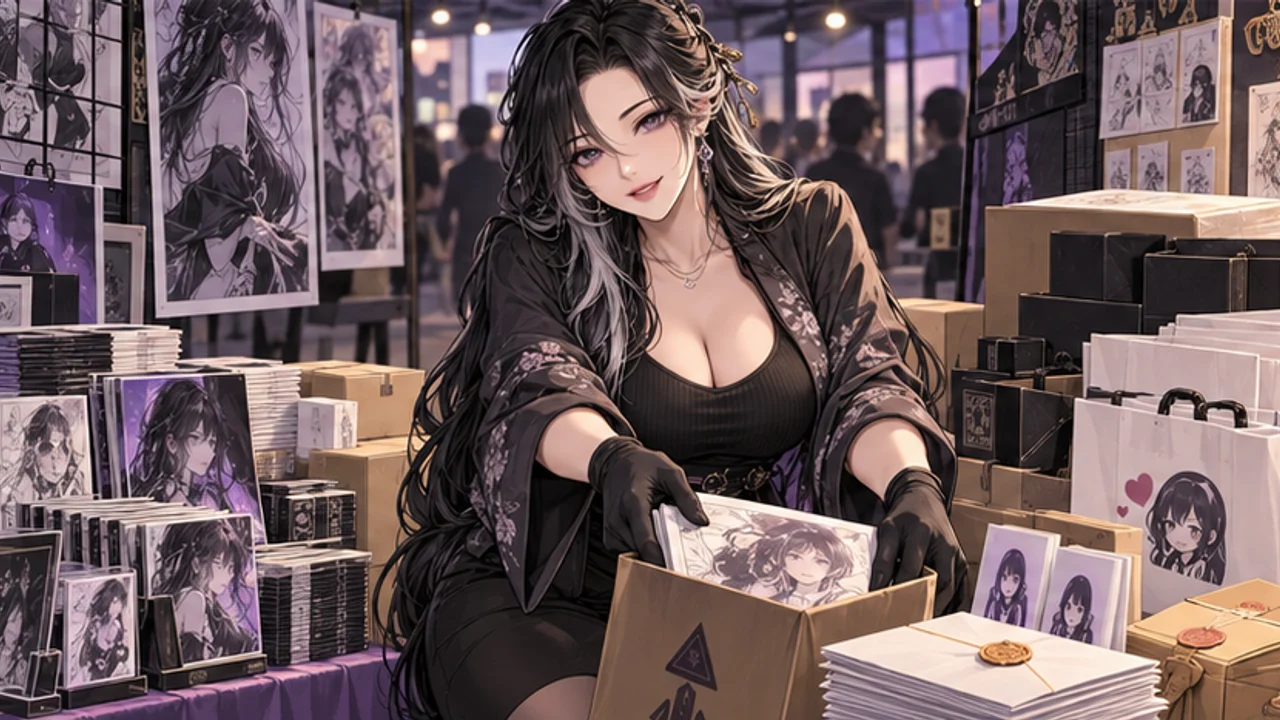
This is where the independent illustration economy lives now.
Pixiv Fanbox is the dominant platform for Japanese illustrators. By its sixth anniversary in 2024:
- 220,000 registered creators
- 12 million users
- 50 billion JPY paid out (~$330 million total since launch)
- Illustrators represent nearly half of all active creators
The average pledge amount per supporter is approximately 500 JPY/month (~$3.30). Most creators with any meaningful audience structure tiers from ¥500 to ¥5,000, offering higher-resolution work, process videos, early access, or explicit content at higher tiers.
Rough income estimates by subscriber count:
| Monthly Subscribers | Avg Pledge ¥500 | Avg Pledge ¥1,000 |
|---|---|---|
| 100 | ¥50,000 ($340) | ¥100,000 ($680) |
| 500 | ¥250,000 ($1,700) | ¥500,000 ($3,400) |
| 1,000 | ¥500,000 ($3,400) | ¥1,000,000 ($6,800) |
| 3,000 | ¥1,500,000 ($10,200) | ¥3,000,000 ($20,400) |
Fanbox takes approximately 10% as its platform fee. Illustrators in the top percentile, recognizable artists with large Pixiv followings who post consistently, can earn ¥1–3M per month from subscriptions alone. These are outliers, not benchmarks.
Patreon follows similar mechanics for artists targeting non-Japanese audiences. The platform reports creators earning over $2 billion annually across all categories. For NSFW adult content specifically:
- DarkCookie (Summertime Saga, adult visual novel) maintains 33,000+ paying patrons
- Top adult illustrators on Patreon earn $5,000–$30,000 per month, with the $30K range reserved for artists with significant established audiences
Fantia is the Fanbox competitor that explicitly allows adult content with fewer restrictions. Popular for hentai illustrators who want more freedom on pricing and content types.
The subscription model rewards consistency and audience-building more than any single artistic breakthrough. An illustrator posting new content every two weeks for three years will generally outperform one whose occasional viral piece brings a spike that doesn't convert to subscribers.
Path 4: Commissions on Skeb, Fiverr, and Direct Work
Commission work is the most accessible income path but also the most time-intensive relative to what it pays.
Rate ranges in 2025–2026:
| Work Type | Entry/Hobbyist | Professional | Top-tier |
|---|---|---|---|
| Single character sketch | $15–$50 | $100–$300 | $500+ |
| Colored full illustration | $50–$150 | $200–$500 | $1,000+ |
| Commercial use (copyright transfer) | Add 50–100% | Add 50–100% | Negotiated |
| Hourly rate | $7–$25 | $50–$130 | $100–$200+ |
Skeb is the Japanese commission platform designed specifically for this market: fans request art, artists accept or decline, no negotiation, flat fee. It's clean and has become the default for Japanese illustrators taking commissions from the Pixiv/Twitter audience.
The freelance ceiling on commissions is roughly $5,000–$8,000 per month for a very productive professional artist who works full hours, maintains a strong portfolio, and has a backlog of clients. Most commission artists earn significantly less because commissions require constant client acquisition, revision cycles, and scope creep.
Commission work is rarely a standalone living. It's best understood as a revenue bridge during periods when subscription numbers are building or between major doujinshi releases.
So Can You Actually Live From This?
This is the honest answer.
Japan's median annual income is approximately ¥4.5 million. Most manga artists don't clear that number, especially in the early years.
One publisher told Japan's Daily Yomiuri that the ratio of professional mangaka who can make ends meet from their work alone is approximately 1 in 100,000. That figure is widely cited and almost certainly includes the survivorship bias that characterizes all creative industries. The failures leave quietly, the successes get the profiles.
More specific data:
- Over 60% of manga assistants earn less than ¥2M per year (~$13,600), and over half cannot survive without a second income source
- A 2022 Anime News Network survey of manga industry professionals found that over 20% feared bankruptcy due to Japan's new invoice system (which cut into freelancer tax deductions)
- Most early-career artists supplement income with part-time jobs, teaching, or other creative freelancing until, and often after, they secure serialization
What changes the equation:
- Getting serialized and having the series sell well enough to generate royalties above basic fees
- Building a Fanbox/Patreon subscriber base of 500–1,000 before trying to go full-time
- Focusing on adult content markets (hentai) where the niche audience pays more directly: there are no free manga reading sites for hentai, meaning fans actually buy
- Diversifying: convention sales + Fanbox + commissions + DLsite simultaneously
The artists who make it work financially are almost never doing just one thing. They're running three or four revenue streams at once, they built their audience over years before monetizing, and they either have low living costs or are based somewhere that ¥2–3M per year is livable.
The art industry has always worked this way. Manga and illustration are not exceptions.

The Top of the Mountain
For context on what the ceiling looks like:
Serialized mainstream manga:
- Eiichiro Oda (One Piece): estimated lifetime earnings exceeding $200 million from royalties, licensing, and merchandise
- Masashi Kishimoto (Naruto): reported net worth in the range of $20–25 million
- At the weekly serialization level, a consistently top-ranked manga generates ¥500M–¥2B in royalties per year for the creator
Hentai / adult doujinshi at scale:
- Top Comiket circles with 1,000+ copies sold per event × ¥700–¥1,000 each, twice per year = ¥1.4M–¥2M from events alone
- Add DLsite digital sales of successful back catalog titles: ¥5–20M annually for recognizable artists
- Add Fanbox subscriptions for artists with 2,000–5,000 patrons: ¥12–30M per year
There are hentai illustrators whose combined income from Fanbox, DLsite, and Comiket exceeds what most salaried workers in Japan earn. They're not the majority. But they exist, and the path to that level is observable: years of consistent output, an anime-centric platform presence (Pixiv), and work that resonates enough to build loyal returning buyers.
Patreon ceiling for adult illustration:
- The platform reports multiple adult game and illustration creators at 10,000+ patrons
- At $5/month average: $50,000 per month gross
- These are outliers. They are also real data points, not mythological.
What the Numbers Actually Mean for Fans of the Medium
If you read hentai manga or doujinshi, the person who drew it almost certainly earned less than you'd expect from something you found compelling.
The doujinshi ecosystem exists in part because the economics of official publishing don't work for adult content at small scale. An artist drawing explicit fan work of an existing IP can't get serialized for that work. They sell it themselves, at Comiket, on DLsite, through Fanbox. The system is informal and largely unprotected.
What keeps it going is the same thing that starts it: the passion precedes the money. Most artists making hentai doujinshi started because they loved the medium, loved specific characters, and wanted to make something of their own. The revenue, when it comes, validates that, but it was never the original reason.
Platforms like Fanbox and DLsite have made it more possible than at any point in the medium's history to turn that passion into something financially sustainable. Licensed reader-facing options include FAKKU and Irodori Comics. Not easy. More possible.
Whether that's enough depends entirely on the artist's expectations, living situation, and tolerance for the uncertainty that comes with all creative work.